Testosterone After 40: What Actually Happens (And What You Can Do)
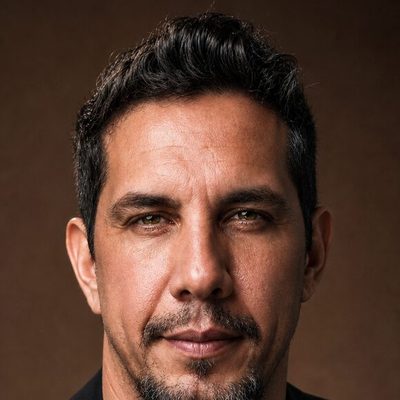
Andrei Alencar
Nutritionist · BJJ Black Belt · Alpha40Fit
Quick Answer
Testosterone falls roughly 1% a year after 30 (Harman 2001), but the change most men actually feel is rising SHBG binding up their free testosterone — which is why symptoms appear while total testosterone still reads normal. Sleep is the single largest lever: one week at five hours a night cut daytime testosterone 10–15% in healthy men. Fix sleep, body fat and training before any supplement.
Your testosterone peaked somewhere in your mid-20s.
You probably didn’t notice. You were just… strong. Recovered fast. Slept hard. Wanted sex.
Then the 30s hit. Then 40. And somewhere along the way, you noticed things were different.
Lower energy. Harder to add muscle, easier to add fat. Motivation that used to come naturally now requires a push. Libido that needs a reason.
This isn’t in your head. It’s hormonal biology.
What Happens to Testosterone After 40
After age 30, men lose roughly 1% of total testosterone per year (PubMed: Harman et al., 2001, J Clin Endocrinol Metab). That sounds small. Over 10 years, that’s up to 10% less testosterone. Over 20 years — you’re working with potentially 20% less of the hormone that drives everything men care about: strength, drive, sex, and mental sharpness.
But here’s the part most articles don’t tell you: total testosterone isn’t the real problem.
What matters more is free testosterone — the bioavailable fraction your body can actually use. A protein called SHBG (sex hormone-binding globulin) increases with age and binds up your testosterone, making it unavailable (PubMed: Harman et al., 2001, J Clin Endocrinol Metab). So even if your labs look “normal,” your body may be running on significantly less functional testosterone than you think.
The Signs You’ve Already Seen
You don’t need a blood test to suspect something’s off. The signs show up in your daily life:
- Fatigue that doesn’t fully resolve with sleep
- Harder recovery after training — soreness lingers
- Belly fat that accumulates despite reasonable eating
- Weaker morning erections, or fewer of them
- Reduced competitive drive, less motivation in the gym
- Mood swings, lower stress tolerance, irritability
Any combination of three or more of those isn’t coincidence. It’s a pattern.
The Two Paths
When men hit this wall, there are two typical responses.
Path 1: TRT (Testosterone Replacement Therapy). A doctor prescribes exogenous testosterone. It works. Blood levels go up. Symptoms improve. But you’re now dependent on injections or gels for life, your natural production shuts down, and you carry the long-term risks that come with external hormone management.
Path 2: Optimize what you have first. Before going pharmaceutical, there are documented nutritional, lifestyle, and supplementation strategies that genuinely move the needle on natural testosterone production.
Most men in their 40s have never seriously tried path 2.
| Optimize Naturally (Path 2) | TRT (Path 1) | |
|---|---|---|
| How it works | Removes the brakes on your own production — sleep, training, body fat, micronutrients | Replaces your hormone from an external source |
| Speed | Weeks to a few months | Days to weeks |
| Reversible | Fully — it’s your own physiology | Natural production shuts down, often hard to restart |
| Dependency | None | Typically lifelong |
| Supervision | Optional, but testing helps | Required — bloodwork and a prescribing doctor |
| Best first move for | Most men over 40 with symptoms | Diagnosed hypogonadism, or after optimization fails |
This isn’t an argument that TRT is bad. For some men it’s the right call. It’s an argument that most men jump to path 1 without ever giving path 2 an honest 90 days.
What Actually Moves Natural Testosterone
This isn’t about gimmicks. These have legitimate research behind them:
Sleep quality. 70% of your daily testosterone is produced during sleep, specifically during REM and deep sleep. One week of sleep deprivation (under 5 hours) can drop testosterone by 10–15% (PubMed: Leproult & Van Cauter, 2011, JAMA). That’s not a rounding error.
Resistance training. Compound lifts — squats, deadlifts, presses — are among the most reliable natural testosterone boosters. Multi-joint, heavy, progressive overload. This isn’t cardio territory.
Body fat management. Adipose tissue converts testosterone to estrogen via aromatase. Men carrying excess belly fat are running a testosterone-to-estrogen conversion machine 24/7. Reducing body fat, especially visceral, raises the testosterone-to-estrogen ratio.
Zinc and magnesium. Two of the most common micronutrient deficiencies in men. Both are directly involved in testosterone synthesis (PubMed: Prasad et al., 1996, Nutrition; Cinar et al., 2011, Biol Trace Elem Res). Most Western diets are chronically deficient in both.
Stress. Cortisol and testosterone are inversely correlated. Chronic stress keeps cortisol elevated, which suppresses testosterone. This is why men with high-pressure jobs and no recovery strategy often have testosterone profiles that don’t match their age.
On Natural Supplements
There’s a lot of noise in this space. But some ingredients have genuine mechanistic rationale and human trial data behind them.
Tongkat Ali (Eurycoma longifolia) has the most consistent evidence for reducing SHBG and increasing free testosterone. Multiple trials showing real-world effects on mood, libido, and hormonal markers (PubMed: Tambi et al., 2012, Andrologia).
Ashwagandha is well-documented as a cortisol modulator (PubMed: Chandrasekhar et al., 2012, Indian J Psychol Med). Reducing chronic stress load has downstream effects on testosterone.
Zinc and Magnesium supplementation, if deficient, can normalize testosterone levels. These aren’t hype — they’re fundamental.
Saw Palmetto supports the testosterone-to-estrogen balance by inhibiting 5-alpha reductase activity (PubMed: Cui et al., 2015, J Sex Med).
Products that combine these ingredients thoughtfully — proper doses, bioavailable forms — can genuinely support your hormonal environment. That’s different from a product that puts 5mg of everything on a label and calls it a “testosterone booster.”
Buying Tongkat Ali, saw palmetto and magnesium as three separate bottles adds up fast. The one formula I've actually vetted ingredient by ingredient combines them — I broke down exactly what holds up (and what doesn't) in my honest EndoPeak review.
Check Today's Price → 🛡 60-day guaranteeWhat to Expect: A Realistic 90-Day Timeline
Anyone promising results in a week is selling something. Here’s what an honest optimization curve actually looks like when you commit to the fundamentals — sleep, heavy training, fat loss, and fixing micronutrient gaps.
Weeks 1–2. Nothing hormonal yet. What changes first is energy and mood, driven by better sleep and the simple momentum of training. Don’t mistake this for a testosterone jump — it’s your nervous system, and it matters.
Weeks 3–4. Sleep architecture improves, training becomes a habit, and many men notice the first shift in libido and morning erections. Your body is starting to respond.
Weeks 5–8. Body composition begins to move if you’re lifting heavy and managing fat. Since adipose tissue converts testosterone to estrogen, every bit of visceral fat you lose improves the ratio in your favor.
Weeks 9–12. This is where the compounding shows up — and where a blood test starts to mean something. If you’re going to retest free testosterone and SHBG, do it around the 90-day mark, not before.
Supplements support this curve. They don’t replace it. A thoughtful formula can help the hormonal environment, but it works with the fundamentals, never instead of them.
Frequently Asked Questions
How much does testosterone drop after 40?
Roughly 1% of total testosterone per year after age 30 (PubMed: Harman et al., 2001, J Clin Endocrinol Metab). Over a decade that’s about 10%. But the more important shift is rising SHBG binding up your free testosterone — which is why men with “normal” labs can still feel the symptoms.
Can I raise testosterone naturally without TRT?
For most men with symptoms but no diagnosed deficiency, yes. Sleep is the biggest lever — one week under five hours a night can cut testosterone 10–15% (PubMed: Leproult & Van Cauter, 2011, JAMA). Add heavy compound lifting, body-fat reduction, and correcting zinc and magnesium deficiencies, and you remove the main brakes on your own production.
Do testosterone-booster supplements actually work?
Some ingredients do; most products don’t. Tongkat Ali has the most consistent evidence for lowering SHBG and raising free testosterone (PubMed: Tambi et al., 2012, Andrologia), and ashwagandha helps by lowering cortisol (PubMed: Chandrasekhar et al., 2012, Indian J Psychol Med). The problem is products that sprinkle 5 mg of a dozen things on a label. Dose and form decide whether a formula does anything.
Should I get my testosterone tested?
It helps — but ask for free testosterone and SHBG, not just total. Total testosterone alone can look fine while your bioavailable level is low. If you’re starting an optimization push, a baseline test plus a retest at 90 days tells you far more than a single number.
Does belly fat lower testosterone?
Yes. Fat tissue runs aromatase, the enzyme that converts testosterone into estrogen. The more visceral fat you carry, the more of your own testosterone you’re converting away — which is why fat loss reliably improves the testosterone-to-estrogen ratio.
Is TRT a bad idea?
Not inherently. For men with genuine hypogonadism it can be the right treatment. The honest caution is that it suppresses your natural production, usually for life, and most men reach for it before giving natural optimization a real 90-day effort. Start with what’s reversible.
The Bottom Line
Testosterone decline after 40 is real, measurable, and affects quality of life in ways men often dismiss as “just getting older.”
It’s not just getting older. It’s a biological process you can influence — through training, nutrition, sleep, stress management, and strategic supplementation.
Start with the basics before considering TRT. Most men who commit to 90 days of serious lifestyle optimization are surprised by how much they reclaim.
The body responds. You just have to give it something to respond to.
 Low Testosterone? Fix These 3 Free Things First
 The Formula I Point Readers To · Affiliate Link
Rather buy one capsule than four separate bottles?
EndoPeak
Everything this article points to — Tongkat Ali to lower SHBG, plus magnesium, saw palmetto and epimedium — assembled in a single formula. It's the male-performance stack I'm comfortable putting my name next to, because the ingredient choices are defensible (I broke them all down in my review).
🛡60-day money-back guarantee. A fair 90-day trial risks nothing.
Free PDF
Get the free Testosterone After 40 Field Guide
The short list of what actually moves your testosterone — with the studies behind it. No spam. Unsubscribe anytime.