Training Through Joint Pain After 40: What Actually Protects Your Joints
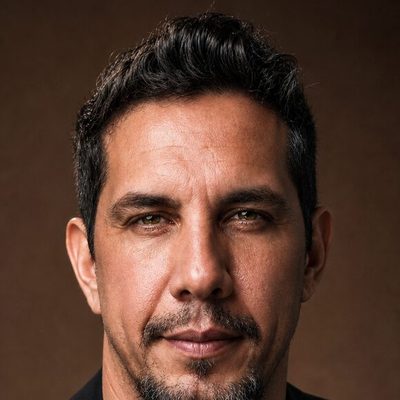
Andrei Alencar
Nutritionist · BJJ Black Belt · Alpha40Fit
Quick Answer
Rest is the wrong default for aching joints after 40. Cartilage has no blood supply and is fed by the compression and release of movement, so prolonged rest starves the tissue you are trying to protect — and muscle acts as the joint's shock absorber, which is why OARSI guidelines put exercise first for knee osteoarthritis (Bannuru 2019). The fix is changing how you load the joint, not stopping.
Let me start where most “joint health” articles won’t: rest is not the answer, and neither is the bottle you saw on a late-night ad.
I’m 49. I’m a nutritionist, I’ve trained Brazilian jiu-jitsu for most of my adult life — black belt, national champion in 2013 — and I’ve spent the last two years back under a barbell. So I’m not writing this from a clinic chair. I’m writing it from the mat and the squat rack, where the knees creak on the first rep and the shoulders remind you of every takedown you ever took wrong. If your joints ache after 40 and you’re trying to figure out whether to push through, back off, or reach for a supplement, that’s exactly the fork I want to walk you through.
Here’s the honest version most guys never hear: the biggest mistake men over 40 make with joint pain isn’t training too hard. It’s the opposite — they train hard for years, feel a twinge, panic, and quit. And quitting is what actually ages the joint.
First, What Actually Wrecks a Joint After 40
The cartilage-wear story you’ve been told — “your joints just wear out, like tires” — is only half true, and the wrong half to act on.
Joints don’t fail mainly because you used them. They fail because of how you loaded them and what you stopped doing around them. Three things do the real damage:
Doing too much, too fast, after doing nothing. The classic over-40 injury isn’t the guy who trains consistently. It’s the guy who sat for a decade, then went all-in on Monday. Tissue adapts to load slowly — tendons and cartilage far slower than muscle. Spike the load overnight and the joint is the part that gives.
Losing the muscle around the joint. After 40 you lose muscle every year you don’t fight for it, and weak muscle means the joint eats forces it was never meant to absorb alone. Muscle is the joint’s shock absorber. Let it waste and every step lands harder on cartilage. This is why strength training is a treatment for joint pain, not a cause of it — the muscle around the joint is one of the main things protecting it (Bannuru et al., 2019, Osteoarthritis and Cartilage).
Sitting still. Cartilage has no blood supply. It’s fed by movement — the joint pumps nutrient-rich synovial fluid through it every time you bend and load it. Stop moving and you literally starve the cartilage. Rest, past a couple of days, is not recovery. It’s slow malnutrition of the exact tissue you’re trying to protect.
Notice what’s not on that list: training itself. Done right, load is the signal that keeps the joint alive.
The Skeptic’s Section: What Doesn’t Work
Before I tell you what does, let me clear out the stuff that wastes the most money and time, because I’ve tried most of it.
Total rest. A few days off an angry joint, fine. Weeks of it? You’ll come back weaker, stiffer, and more fragile than when you stopped. The pain fades and then returns the moment you load again, because nothing about the joint got stronger — it just got quieter while it got worse.
Glucosamine and chondroitin — for most men. These are the default joint pills, and the biggest, best-run trial we have (the NIH’s GAIT study) found the combination worked no better than placebo for most people with knee osteoarthritis (Clegg et al., 2006, New England Journal of Medicine). A subgroup with more severe pain may get some relief, but if you’re buying glucosamine expecting it to rebuild your knees, the evidence doesn’t back you. It’s the most-sold joint supplement and one of the least impressive in the data — I read through the whole trial, the side effects and the one exception in does glucosamine actually work.
“Anti-inflammatory” everything. Chronic NSAID use quiets pain but does nothing for the underlying joint, and long-term it carries its own gut and kidney costs. Useful as a short bridge through a flare. A terrible long-term plan.
If your strategy is rest plus glucosamine plus ibuprofen, you’re running the three things with the weakest case. Let’s fix that.
What Actually Protects Joints After 40
1. Keep Training — But Manage Load, Not Avoid It
The single most evidence-backed thing you can do for an aching joint is the thing most men quit: keep loading it, intelligently. Strengthening and aerobic exercise are the core recommendation for knee and hip osteoarthritis in every major guideline, ahead of any supplement or injection (Bannuru et al., 2019, Osteoarthritis and Cartilage).
The word that matters is manage. You don’t push through sharp, swelling, get-worse-the-next-day pain — that’s a signal. But the dull ache that warms up and fades as you move? That’s a joint asking to be loaded, not rested. Reduce range, drop the weight, slow the tempo, swap the movement — but keep the joint working. I’ve never once fixed a cranky knee by avoiding it. I’ve fixed plenty by loading it smarter.
2. Build the Muscle Around the Joint
Strong quads protect the knee. Strong glutes and hips protect everything below them. Strong upper back protects the shoulder. This isn’t optional after 40 — it’s the difference between a joint that ages well and one that doesn’t. If you take nothing else from this article: the barbell is joint insurance, not joint damage. I go deeper on why lifting matters so much after 40 in how strength training raises testosterone after 40 — the same training that protects your joints protects your hormones too.
3. Feed the Synovial Fluid
Here’s the part almost nobody talks about, and it’s the one that changed how I think about aging joints.
Inside every joint is a thin layer of synovial fluid — the body’s own lubricant and shock absorber. Its key ingredient is hyaluronan, a molecule that makes the fluid thick, slippery, and cushioning. And hyaluronan declines with age. The fluid gets thinner, the cushioning drops, and the joint that used to glide starts to grind. That morning stiffness, the ache that eases once you “get going” — that’s often thin synovial fluid, not worn cartilage.
This matters because it’s addressable. Movement drives the fluid through the joint. And a handful of ingredients — hyaluronan itself, plus anti-inflammatory compounds like boswellia and pine bark extract — have real human trials behind them for supporting that fluid and calming the inflammation that thins it. That’s a different, more useful target than “rebuild my cartilage,” which no pill has been shown to do.
I break the individual ingredients down, with doses and the men who should skip each, in the best joint supplements for men over 40. And because hyaluronan is the one most people have never heard of, I gave it its own deep dive in hyaluronic acid for your joints.
4. The Boring Levers That Actually Move the Needle
Carrying extra weight multiplies the load through every step — losing even a little takes real force off the knees. Protein feeds the muscle that protects the joint. And sleep is when connective tissue actually repairs; under-sleep and you blunt recovery everywhere, joints included. None of this is exciting. All of it outperforms the average joint supplement.
Where Supplements Actually Fit
Supplements are the last 10%, not the first 90%. Fix your training, your muscle, your weight, and your sleep first — no capsule out-performs those. But once that foundation is in place, the synovial-fluid and anti-inflammatory ingredients can be a real, modest edge, especially for the morning stiffness and the day-after-training ache.
That’s the narrow, honest role I give them — and it’s why, if I point readers to one formula, it’s built around hyaluronan (Mobilee) plus boswellia and pine bark rather than the glucosamine the data doesn’t support.
The Joint Formula I Point Readers To · Affiliate Link
Stiff first thing in the morning, or aching a day after you train?
Joint Genesis
The mechanism this article keeps coming back to is thinner, drier synovial fluid — the shock absorber inside the joint. Joint Genesis is built around that: Mobilee (a hyaluronan complex shown to raise the joint's own hyaluronan), plus Pycnogenol, boswellia and ginger for the inflammation side. It's the joint stack I'm comfortable pointing readers to, because the ingredient choices track the research rather than the marketing.
🛡180-day money-back guarantee — joints move slowly, so that's a fair window to judge it.
I may earn a commission at no cost to you, which helps keep this site running.
The Bottom Line
Aching joints after 40 are not a stop sign. They’re a signal to train smarter, not less. The men whose joints hold up into their 50s and 60s aren’t the ones who rested them — they’re the ones who kept loading them intelligently, built the muscle around them, kept moving to feed the cartilage, and used supplements as a small final edge on top of all that.
I’m still training hard at 49 with joints that have taken a decade of jiu-jitsu. Not because I avoided load — because I never stopped earning it. Get the order right, and your joints can keep up with you a lot longer than the tire-wear story wants you to believe.
The full plan — training, nutrition, and the few supplements worth the money — is in the free field guide below.
This article is educational and not medical advice. Sharp, swelling, or worsening joint pain deserves a doctor’s evaluation, not a supplement.
The Joint Formula I Point Readers To · Affiliate Link
Stiff first thing in the morning, or aching a day after you train?
Joint Genesis
The mechanism this article keeps coming back to is thinner, drier synovial fluid — the shock absorber inside the joint. Joint Genesis is built around that: Mobilee (a hyaluronan complex shown to raise the joint's own hyaluronan), plus Pycnogenol, Boswellia and ginger for the inflammation side. It's the joint stack I'm comfortable pointing readers to, because the ingredient choices track the research rather than the marketing.
🛡180-day money-back guarantee. Joints move slowly — that's a fair window to judge it.
Free PDF
Get the free Testosterone After 40 Field Guide
The short list of what actually moves your testosterone — with the studies behind it. No spam. Unsubscribe anytime.